Awareness of the world

Awareness of the world

Awareness of the world

Awareness of the world

Awareness of the world

Awareness of the world

Awareness of the world

Awareness of the world

Awareness of the world

Awareness of the world

Thursday, January 28, 2016

UN Youth Delegate Programme

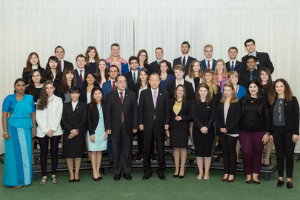
UN Youth Delegate ProgrammeParticipation in decision-making is one of the key priority areas of the United Nations agenda on youth. One form of youth participation at the United Nations is through the inclusion of youth delegates in a country’s official delegation to the United Nations General Assembly and various functional Commissions of the Economic and Social Council.The youth delegate programme is coordinated by the Focal Point on Youth at the global level, but it is the responsibility of the Member States to establish a youth delegate programme at the national level, and to decide who will represent the young people of their country. The roles of a youth representative varies from country to country, but normally includes providing input to their delegation on issues related to youth and participate in their delegation’s general work through attending meetings and informal negotiations.
Youth delegates can participate in several intergovernmental meetings at the United Nations. Most official youth delegates participate in the General Assembly, but some also attend functional Commissions of the Economic and Social Council.
Guide to Youth Delegates to the United Nations: English I Français I Español I Русский I  عربي I  汉语

General Assembly
Commission for Social Development (CSocD)

How to become a youth delegateYouth Delegates
Some countries have existing programmes to select youth delegates. You can determine this by looking at the list of former youth delegates of previous years. If your country does not have a programme in place to select a youth delegate, your task will be two-fold:
  • First, you have to convince your country on the importance of having a youth representative in its delegation to the UN General Assembly.
  • And secondly, once they’ve established the position, you will have to initiate a selection process.
Some steps you may consider include:
  • Determine whether or not your country currently has a youth representative programme. If it does, inquire through your department of foreign affairs or a national youth council about how the application process works.
  • If your country does not currently have a youth representative programme, you will have to lobby to have one created. This can be done most effectively by working in cooperation with existing youth organizations in your country.
  • Sometimes the process may work very quickly, and sometimes it may take a greater effort to have youth delegates become part of government policy.
  • Some steps you might take would include:
    • Write to your minister of foreign affairs (or equivalent), outline the merits of youth delegates, and offer to meet to discuss it further.
    • Contact the Minister for Youth (or equivalent), senior public servants, the Ambassador to the UN, or even the Head of State.
    • You might also try to get letters of endorsement from all of the above, plus key civil society leaders, national and international.
  • After the proposal has been accepted, and a nomination and selection procedure established, the next step would be to apply for the position.
Related resources:
* Contributions from youth delegates and others.
UN CONFERENCES THAT YOUTH CAN PARTICIPATE IN
Youth delegates can participate in several intergovernmental meetings at the United Nations. Most official youth delegates participate in the General Assembly, but some also attend functional Commissions of the Economic and Social Council.
Youth delegates to the General Assembly
The Third Committee, the arm of the General Assembly that deliberates on Social, Cultural and Humanitarian Issues.Matters that pertain specifically to youth currently fall under the agenda item called “Social development, including questions relating to the world social situation and to youth, ageing, persons with disabilities and the family”. Generally, this agenda item is considered in the Third Committee of the General Assembly during the month of October, however, this is subject to change based on the annual programmes of work adopted by Member States. The agenda of the General Assembly, including that of its Third Committee, is usually available in late summer at: http://www.un.org/ga.
Youth delegates to the Commission for Social Development (CSocD)
The Commission for Social Development is a functional commission of the Economic and Social Council (ECOSOC). The body is in charge of the follow-up and implementation of the Copenhagen Declaration and Programme of Action of the World Summit for Social Development and meets annually in February for one and a half weeks. It covers key social development themes such as poverty, employment and social integration and the issue of youth falls within the latter.
A youth resolution is traditionally adopted every two years. Typically youth delegates that have been selected for the General Assembly also participate in the Commission for Social Development, since the work of the two bodies is closely interlinked.
Youth delegates to the Commission on Sustainable Development (CSD)
The Commission on Sustainable Development (CSD) is responsible for reviewing progress in the implementation of Agenda 21 and the Rio Declaration on the Environment and Development, as well as providing policy guidance to follow up on the Johannesburg Plan of Implementation (JPOI) at the local, national, regional and international level. The CSD meets annually in New York during the month of May for two weeks, and is open to both governmental and non-governmental actors. Young people can participate either by being a member of their country’s official delegation, or by representing an NGO through the major group for Children and Youth. Participating NGOs must be in consultative status with the Economic and Social Council (ECOSOC), including those accredited on the CSD Roster.

Country Profiles for the Youth Delegates PROGRAMMES
  SwedenSweden
Share:

IMF launches Youth Video Contest in Asia to capture the stories of the Asia-Pacific region

The International Monetary Fund (IMF) today launched the 2016 Advancing Asia: Investing for the Future Youth Video Contest. The competition—to be held in conjunction with the Advancing Asia conference, that will take place in New Delhi, India, on March 11–13, 2016—seeks videos from young videographers of all abilities capturing through their own lenses the realities, challenges, and interesting stories of the Asia-Pacific region.
The contest, open to ages 18–30, will accept submissions from December 29, 2015 to January 26, 2016. The public voting through social media will begin when the videos are submitted and will end on February 3, 2016. The top 10 finalists from this round will be evaluated by a panel of judges. The selection will be based on originality, technical excellence and artistic merit. Two winners will be announced on February 15, 2016 on the www.advancingasia.org website. Winners will receive a three-day trip to New Delhi to attend the conference.

IMF Launches Youth Video Contest in Asia

The contest is open to citizens of Australia, Bangladesh, Bhutan, Brunei Darussalam, Cambodia, China, Fiji, Hong Kong SAR, India, Indonesia, Japan, Kiribati, Korea, Lao P.D.R., Macao SAR, Malaysia, Maldives, Marshall Islands, Micronesia, Mongolia, Myanmar, Nepal, New Zealand, Palau, Papua New Guinea, Philippines, Samoa, Singapore, Solomon Islands, Sri Lanka, Thailand, Timor-Leste, Tonga, Tuvalu, Vanuatu, and Vietnam.
Full contest details can be found at http://advancingasia.strutta.com/.
The Advancing Asia conference, co-sponsored by the government of India and the IMF, will take stock of the Asia-Pacific region’s economic performance and the policy challenges that will have a great bearing on social and economic progress. Key issues to be addressed at the conference will include: growth models; income inequality, demographic change, and gender; infrastructure investment; climate change; managing capital flows; and financial inclusion. Participants will include government ministers and central bank governors, business executives, academics, and civil society leaders. Keynote speakers will include Prime Minister Narendra Modi of India and IMF Managing Director Christine Lagarde.
Share:

Prime Minister's Programme for Youth

Prime Minister's Youth Programme is a revolutionary programme for the socio-economic development of youth, in a bid to combat soaring unemployment in the country. It has a broad canvas of schemes aimed at enabling youth and poor segments of population to: Get good employment, opportunities, Secure economic empowerment, Acquire skills needed for gainful employment, Have access to higher education and IT tools, Access to on-the-job training/internship for young graduates to improve the probability of getting a productive job

Youth Click Here
Share:

International Scholarship Programme

The 2016-2017 International Scholarship Programme application cycle is now open. Application forms can be obtained from the Aga Khan Foundation or Aga Khan Education Service/Board office in the applicant’s country of current residence.
Before contacting the AKDN, please read the information below. Addresses and contact information are available under Application Procedures. In case you are looking for information about scholarships for your further studies, this list of scholarship links may be helpful.
The Aga Khan Foundation provides a limited number of scholarships each year for postgraduate studies to outstanding students from select developing countries who have no other means of financing their studies, in order to develop effective scholars and leaders and to prepare them for employment, primarily within the AKDN. Scholarships are awarded on a 50% grant : 50% loan basis through a competitive application process once a year in June or July. The Foundation gives priority to requests for Master's level courses but is willing to consider applications for PhD programmes, only in the case of outstanding students who are highly recommended for doctoral studies by their professors and who need a PhD for the fulfilment of their career objectives (academic or research oriented).
Applications for short-term courses are not considered; neither are applications from students who have already started their course of study.
Eligibility
Geographic Scope
The Foundation accepts applications from nationals of the following countries: Bangladesh, India, Pakistan, Afghanistan, Tajikistan, Kyrgyzstan, Syria, Egypt, Kenya, Tanzania, Uganda, Madagascar and Mozambique. In France, Portugal, UK, USA and Canada, applications are accepted from those who are originally from one of the above developing countries, are interested in development-related studies and who have no other means of financing their education.
Residency Requirement
The Foundation only accepts applications of eligible nationals listed above who are residing in one of the countries where there are local Aga Khan Foundation (AKF), Aga Khan Education Services (AKES), or Aga Khan Education Board (AKEB) offices which process applications and interview candidates.
Age Limit
Preference is given to students under 30 years of age.
Selection Criteria
The main criteria for selecting award winners are: l) consistently excellent academic records, 2) genuine financial need, 3) admission to a highly reputable university or programme of study and 4) relevance of the field of study to AKDN’s focus areas. Candidates are also evaluated on demonstrating thoughtful and coherent educational and career plans, their extra-curricular interests and achievements, potential to achieve their goals and likelihood to succeed in a foreign academic environment. Applicants are expected to have some years of work experience in their field of interest.
Financial Assistance
The Foundation assists students with tuition fees and living expenses only. The cost of travel is not included in AKF scholarships. Funding for PhD programmes is only provided for the first two years of study, after which the students are expected to find alternative sources of assistance. Financial assistance is provided according to the needs of students, but the ISP must be considered a lender of last resort. Applicants are requested to make every effort to obtain funding from other sources as well, so that the amount requested from the Foundation can be reduced to a minimum. Preference is given to those who have been able to secure some funding from alternative sources.
Loan Conditions
Half of the scholarship amount is considered as a loan, which must be reimbursed with an annual service charge of 5%. A guarantor is required to co-sign the loan agreement. The payback period is five years, starting six months after the study period funded by the Aga Khan Foundation.
Application Procedures
The application procedures of AKF's International Scholarship Programme are decentralised. Students may obtain application forms as of January 1st each year from AKF offices or Aga Khan Education Services / Boards in their countries of current residence. Completed applications should be returned to the agency from which the form was obtained. They should not be sent to Geneva.
Application Deadline
The deadline for submission of entire completed applications is March 31, although in certain countries internal deadlines may be earlier in order to process and review applications. Applicants are advised to contact the local offices for internal deadline dates and requirements as these may vary from country to country. Late or incomplete applications will not be accepted.
Country OfficesInternal Deadlines
Aga Khan Foundation (Bangladesh)Deadline for submitting pre-application forms:
10th March, 2016

Deadline for submitting completed applications:
31st March, 2016
Aga Khan Foundation (India)Deadline for application distribution:
16th March, 2016 (5:00 pm IST)

Deadline for submitting completed applications:
19th March, 2016 (5:00 pm IST)
Aga Khan Foundation (Pakistan)
Aga Khan Education Board (Pakistan)
Deadline for submitting pre-application forms:
16th March, 2016

Deadline for submitting completed applications:
31st March, 2016
Aga Khan Foundation (Portugal)
Aga Khan Education Board (Portugal)
Deadline for submitting completed applications:
25th March, 2016

Interview and Selection Notification
Applicants should be prepared to be interviewed by local Scholarship Committees about their financial situation, their academic performance, extra-curricular achievements and career plans.
The annual Scholarship Selection Meeting takes place in late June or early July and the Aga Khan Foundation notifies all students of the outcome of their application shortly thereafter.
Share:

Tuesday, January 26, 2016

Chinese Government Scholarship-Bilateral Program

Bilateral Program includes a full or partial scholarship established by MOE in accordance with educational exchange agreements or consensus between Chinese government and governments of other countries, institutions, universities or international organizations.
I Supporting Categories, Duration and Instruction Language
Supporting Category
The Bilateral Program supports undergraduate students, graduate students, general scholars and senior scholars. Please consult the dispatching authorities of your home country for the categories available.

Instruction Language
Undergraduate scholarship recipients must register for Chinese-taught credit courses. Graduate and non-degree scholarship students can register for either the Chinese-taught program or the English-taught program if applicable. Program Search (By visiting http://www.csc.edu.cn/laihua orhttp://www.campuschina.org) can help you find the program and university you're interested in.

Duration
The scholarship covers both major study and Chinese language (preparatory study).  
Supporting Categories
Major Study(year)
Chinese Language(Preparatory Study)(year)
Duration of
Scholarship(year)
Undergraduate students
4-5
1- 2
4-7
Master’s students
2-3
1-2
2-5
Doctoral students
3-4
1- 2
3-6
General scholars
up to 1
up to 1
up to 2
Senior scholars
up to 1
up to 1
up to 2
 
II Scholarship Coverage
The Bilateral Program provides both full scholarships and partial scholarships. Please refer to Introduction to CGS—Coverage and Standard for details of each item.
 
III Where and When to Apply
Where to Apply
Apply to the dispatching authorities for overseas study of your home country.
When to Apply
You need to apply between early January and early April. Please consult the dispatching authorities for the specific deadline of each year.
 
IV Eligibility
1. Applicants must be a citizen of a country other than the People’s Republic of China, and be in good health.
2. The requirements for applicants’ degree and age are that applicants must:
 be a high school graduate under the age of 25 when applying for the undergraduate programs;
 be a bachelor’s degree holder under the age of 35 when applying for the master’s programs;
 be a master’s degree holder under the age of 40 when applying for the doctoral programs;
 be under the age of 45 and have a high school diploma (or higher) when applying for the general scholar programs;
 be a master’s degree holder or an associate professor (or above) under the age of 50 when applying for the senior scholar programs.
 
V Application Procedure
Step 1 - Apply to the dispatching authorities for overseas study of your home country for CGS opportunity;
Step 2 - Apply to your target university for the Pre-admission Letter once recommended by the dispatching authorities as an eligible candidate (you will receive an Award Letter for CGS Candidate);
Step 3 - Complete the online application procedure at CSC Online Application System for International Students (Visit http://www.csc.edu.cn/laihua or http://www.campuschina.org and click “Application Online” to log in), submit online the completed Application Form for Chinese Government Scholarship and print a hard copy. You should consult the dispatching authorities for overseas study of your home country for Instructions of CSC Online Application System for International Students and Agency Number;
Step 4 - Submit all of your application documents to the dispatching authorities of your home country before the deadline.
NOTE
Only applications of recommended candidates from dispatching authorities will be considered. Candidates holding a Pre-admission Letter will be placed in the host university; those without the Pre-admission Letter should accept CSC’s placement of university.
 
VI Application Documents(in duplicate)
1. Application Form for Chinese Government Scholarship (written in Chinese or English);
2. Notarized highest diploma (photocopy);
Prospective diploma recipients must submit official document issued by your current school to prove your current student status or expected graduation date. Documents in languages other than Chinese or English must be attached with notarized Chinese or English translations.
3. Academic transcripts (written in Chinese or English);
Transcripts in languages other than Chinese or English must be attached with notarized Chinese or English translations.
4. A Study Plan or Research Proposal (written in Chinese or English);
This should be a minimum of 200 words for undergraduate students, 500 words for non-degree students, and 800 words for graduate students.
5. Two Recommendation Letters (written in Chinese or English);
Applicants for the graduate programs or the senior scholar programs must submit two recommendation letters signed by a professor or an associate professor.
6. A CD of your own works (only required for arts students);
Applicants for music studies are requested to submit a CD of their own musical works. Applicants for the fine arts programs must submit a CD of their own works which include two sketches, two color paintings and two other works.
7. Valid documents of your legal guardians in China (only required for applicants under the age of 18);
8. Foreigner Physical Examination Form (photocopy), (written in English, only required for applicants planning to stay in China for more than 6 months, can be downloaded fromhttp://www.csc.edu.cn/laihua or http://www.campuschina.org); The physical examinations must cover all of the items listed in the Foreigner Physical Examination Form. Incomplete forms or forms without the signature of the attending physician, or the official stamp of the hospital, or a sealed photograph of the applicant are considered as invalid. Please carefully plan your physical examination schedule as the result is valid for only 6 months.
9. The copy of Pre-admission Letter from designated Chinese university (if available);
10. The copy of HSK Certificate (if available).
All documents should be bound together on top left corner in the order of 6.1 to 6.10.
You should submit TWO sets of bound documents.
No application documents will be returned.
 
VII Placement & Scholarship Confirmation
1. Application documents of recommended candidates from dispatching authorities will be considered by CSC for eligibility and qualification. Ineligible or incomplete applications will not be considered.
2. Qualified applications will be sent to universities for placement. Based on various factors, such as the different scholarship funding requirements of every country, the host university's teaching capacity, study length and applicants’ criteria, CSC reserves the right to make necessary adjustments/changes to the candidate’s host university, field of study, supporting categories and duration of scholarship. Applications enclosed with the Pre-admission Letter will be sent to the universities who issued that Letter for placement confirmation.
3. After placement confirmation by Chinese universities, scholarship Recipients will get Chinese government scholarships to study in China with approval by CSC. Each scholarship recipient will be granted with no more than one scholarship.
4. CSC reviews the placement results, approves the List of Scholarship Recipients and sends the admission documents to the Chinese embassy or consulate-general before July 31st. The Chinese embassy or consulate-general will send the admission documents (List of Scholarship Recipients, Admission Letter and Visa Application Form for Study in China (JW201)) to the dispatching authorities or scholarship recipients.
5. Scholarship recipients shall not change their host university, field of study, or duration of study unless they give up the grant.
6. Scholarship will not be reserved if the scholarship recipient cannot register before the registration deadline.
 
VIII Contact information of CSC
Asia Tel: 0086-10-66093928 66093923
Africa Tel: 0086-10-66093921 66093919
Europe Tel: 0086-10-66093953    
America & Oceania Tel: 0086-10-66093977
E-mail: meida@csc.edu.cn
Fax:0086-10-66093915, 66093972
Address: Division of International Students Affairs, China Scholarship Council
Level 13, Building A3, No.9 Chegongzhuang Avenue, Beijing, P.R China
Postcode:100044
Share:

SUMMER INTERNSHIP PROGRAM

Our structured summer internship program provides firsthand experience working in a museum. It's a great introduction to museum work or an opportunity to expand on previous experience.
Each year, positions are available in areas such as aviation or space history, planetary science, collections management, digital experience, exhibit and graphic design, communications, budget and finance, or education. Students from all fields of study are encouraged to apply.
During the 10-week program, each intern is assigned a supervisor and works on an internship project and other tasks. In addition to their projects, interns also frequently meet as a group for presentations, professional development opportunities, enrichment activities, and tours.
Where does this internship take place?
Many interns work at the Museum in Washington, DC, but others work at the Steven F. Udvar-Hazy Center in Chantilly, Virginia, or the Paul E. Garber Preservation, Restoration, and Storage Facility in Suitland, Maryland.
When does the internship program take place? 
The 2016 program will run from June 1, 2016 until August 5, 2016. Interns work full-time, 40 hours a week.
Are the dates flexible?
We are happy to work with you to figure out a start and end date that work with your existing commitments and school schedule. However, a commitment of 10 weeks during the summer is required.
Is there financial support for this internship?
We provide a $5,500 stipend to help interns defray expenses. This stipend is administered in intervals during the internship period.
Who can apply?
To be considered for the Summer Internship Program, you must be a high school graduate and be currently enrolled in, or recently graduated from, a degree-granting undergraduate or graduate program at an accredited college or university. You are expected to have a strong academic record. Applicants from outside the U.S. are welcome! More information for international interns is available on the intern orientation website.
How and when do I apply?
Applications are accepted from January 15 to February 15 during the calendar year of the internship. Interns are notified of the status of their application by April 1.

The National Air and Space Museum Summer Internship Program application must be submitted via the Smithsonian Online Academic Appointment System (SOLAA) website. Complete applications must include:
  • Unofficial transcript
  • Two letters of recommendation
  • A statement of purpose (500-1,000 words) indicating the type of internship you are interested in and how an internship will contribute to your education and career goals
What do I need to know to qualify for an internship? 
Internships are opportunities to learn and grow your skills. While you don't necessarily need work experience related to the internship you plan to apply for, you are expected to have a base knowledge of or familiarity with the subject (e.g.. exhibits design interns will be expected to have familiarity with programs such as Illustrator and Photoshop).

What Internships are Available

The following internships are available for our Summer 2016 program. When applying in SOLAA, you may indiciate the internships you're interested in through the "Project Choices" drop down.
Location: Museum in Washington, DC
Advancement
Aeronautics: Aeronautical R&D during World War II
Aeronautics: Curatorial Collections Management
Aeronautics: General Aviation Exhibition Research
Aeronautics: Photo Archiving and Exhibition Support
Aeronautics: Writing about the Cold War
Center for Earth and Planetary Studies
Communications: Public Affairs
Digital Experiences: Evaluation
Digital Experiences: Social Media
Digital Experiences: Digital Storytelling
Education: Engaging Girls in STEM
Education: Interactive and Exhibition Development
Education: Public Observatory and Astronomy
Exhibits Design: Archival Informational Management
Exhibits Design: CAD
Exhibits Design: Graphic Design

Exhibits Technology
Finance
Health and Safety
Information Technology
Interactive Media and Outreach: Museum Experience
Interactive Media and Outreach: Science Education
Interactive Media and Outreach: Video Production
Project Management
Registrar
Space History: Apollo Command Module
Space History: Human Spaceflight as Religion
Space History: Planetary Art Collection
Space History: Post-WWII Aviation and Space Technologies
Space History: Spacesuit Collection
Visitor Services
Location: Steven F. Udvar-Hazy Center in Chantilly, VA
Communications: Marketing
Education: Aerospace Education and Family Day Planning
Education: Engaging Girls in STEM
Visitor Services
Location: Paul E. Garber Facility in Suitland, MD
Exhibits Production
Share:

Stipendium Hungaricum Programme

APPLICATION INFORMATION

WHO CAN APPLY?
Students can apply from the following partner countries:
Algeria, Angola, Argentina, Azerbaijan, Bosnia and Herzegovina, Belarus, Cambodia, China (including the Hudec scholarships), Colombia, Ecuador, Egypt, Ethiopia, Georgia, India, Iran, Iraq, Japan, Jordan, Kazakhstan, Kenya, Korea, Kurdistan Regional Government/Iraq, Laos, Lebanon, Macedonia, Mexico, Moldova, Mongolia, Morocco, Myanmar, Namibia, Nigeria, Pakistan, Palestine, The Philippines, Russia, Serbia, Tunisia, Turkey, Turkmenistan, Uruguay, Vietnam, Yemen

WHAT ABOUT THE FINANCIAL PROVISION?
Financial provisions:
(relevant for every full-time scholarship holder for academic year 2015/2016)

• no tuition fee
• monthly stipend:
• dormitory places or additional contribution to accommodation costs
• medical insurance 

The travel costs have to be covered by the applicants.

HOW CAN YOU APPLY FOR THE PREPARATORY PROGRAMME?
You can apply on the official website of the Stipendium Hungaricum Programme (www.stipendiumhungaricum.hu) which also provides general information and the official documents.

DETAILED NEW INFORMATION ABOUT THE NEXT APPLICATION FORESEEN:
 in January 2016.

NEXT DEADLINE FORESEEN:
 1 March 2016
Share:
Powered by Blogger.

Labels

Recent Posts

Pages

Theme Support